



Stakeholder Communication
We define stakeholders as a group or an organization that can affect or be affected by ASEH. Based on the 5 major principles (dependency, responsibility, influence, diverse perspective, tension) of the AA1000 Stakeholder Engagement Standard (SES), we have identified 7 major categories of stakeholders. They are categorized into two groups based on whether the impact is direct or indirect. Our direct stakeholders include shareholders, employees, customers, and suppliers/contractors; our indirect stakeholders include community (incl. NGOs, media and academic institutions), government and industry unions/associations.
We engage with our stakeholders through a variety of means, depending on the nature of the relationship. The methods of engagement will vary depending on the stakeholders, the issues of concern and the purpose of engagement. We regularly report the stakeholder communication status to the board of directors every year.
Communication Mechanisms
Customer quarterly business review meetings
Customer audits
Customer service platforms
Technical forums
Ad-hoc meeting requests from customers
Communication Frequency: As needed
Designated Units
COO Office
Sales Offices
2025 Issues of Concern
Customer Relationship Management
Business Ethics
Regulatory Compliance
Risk and Crisis Management
Data and Privacy
Information Security Management
Smart and Sustainable High-Tech Facility
2025 ASEH Response and Communication Outcomes
We achieved a customer satisfaction rating of 94% in 2025, which met our target of 90%
We ensure that relevant information on customers’ periodic enquiries into issues such as migrant worker rights, supply chain disruptions, net zero status and renewable energy use, are provided in a timely manner
Communication Mechanisms
GM and plant manager’s mailbox
Intranet websites, bulletin board and display walls
Seminars/employee forums
Employee engagement surveys
Service and complaint hotlines
Communication Frequency: As needed
Designated Units
CAO Office
HR Departments
2025 Issues of Concern
Occupational Health and Safety
Human Rights Management
Risk and Crisis Management
Data and Privacy
Regulatory Compliance
Information Security Management
Business Ethics
2025 ASEH Response and Communication Outcomes
In 2025, more than 2,300 seminars/employee forums were held, including 177 sessions for new employees, 710 sessions for foreign workers, 50 instances of regular labor-management negotiations and 1,375 sessions for regular employees
The number of internal employee complaints totaled 937, all of which were closed satisfactorily
Communication Mechanisms
Annual and quarterly financial reports
Quarterly earnings conferences
Annual shareholders’ meetings
Quarterly institutional investors' conferences
Communication Frequency: Annually/quarterly
Designated Units
Company Spokesperson
Investor Relations Department, CFO Office
2025 Issues of Concern
Regulatory Compliance
Business Ethics
Risk and Crisis Management
Innovation Management
Sustainable Supply Chain
Data and Privacy
Human Rights Management
Waste and Circular Reuse
2025 ASEH Response and Communication Outcomes
In 2025, we held the annual shareholders’ meeting and four quarterly earnings conferences, and participated in 18 investor conferences to communicate company strategy, performance and industry trends
In 2025, our consolidated operating revenue was NT$645.4 billion - an increase of approximately NT$50 billion or 8.4% compared with 2024
Communication Mechanisms
Supplier questionnaire surveys
Supplier on-site audits
Annual supplier forums and supplier sustainability awards
Supplier capacity-building activities
Supplier information security evaluation
Communication Frequency: Annually/As needed
Designated Units
ESG Office
ASE Global Integrated Solutions Co., Ltd.
Procurement Departments
IT Departments
2025 Issues of Concern
Business Ethics
Regulatory Compliance
Occupational Health and Safety
Risk and Crisis Management
Customer Relationship Management
Data and Privacy
Information Security Management
2025 ASEH Response and Communication Outcomes
More than 820 Tier-1 suppliers completed sustainability assessment questionnaire response, while 221 suppliers underwent sustainability on-site assessment
More than 14,000 suppliers participated in sustainability forums/training workshops
For the 3rd year Supplier Sustainability Awards, we selected one supplier for the Low-carbon category and two for the Circular Economy category and completed 2 on-site audits in the second year of the 2nd Supplier Sustainability Awards project
Communication Mechanisms
Communication meetings, conferences, forums or seminars held by government authorities
Proactive dialogue with government authorities
Reporting through government portals
Communication Frequency: As needed
Designated Units
Public Affairs Division, CFO Office
CAO Office
2025 Issues of Concern
Regulatory Compliance
Waste and Circular Reuse
Occupational Health and Safety
Air Pollution Prevention
Water Resource Management
Energy Management
Business Ethics
2025 ASEH Response and Communication Outcomes
The Environmental Safety and Health (ESH) Committee - Assembly and Test Working Group is a platform formed by our company together with industry peers to help address industrial safety and environmental issues across Taiwan’s semiconductor industry. The group analyzes trends and developments in international law and provides references for government agencies to formulate policy and regulatory amendments related to the semiconductor assembly and testing industry. It also plays a critical role in supporting the relevant authorities to formulate regulatory proposals that align with current and future industry developments
Communication Mechanisms
Community perception surveys and needs assessments
Communication meetings, forums, seminars or workshops held by NGOs
Volunteer activity cooperation with NGOs
Press releases
Spokesperson interviews
Company's website
Communication Frequency: As needed
Designated Units
Public Affairs Division, CFO Office
CAO Office
HR Departments
2025 Issues of Concern
Air Pollution Prevention
Waste and Circular Reuse
Water Resource Management
Energy Management
Business Ethics
Social Involvement
Climate Strategy
2025 ASEH Response and Communication Outcomes
We collaborated with over 50 NGOs to support environmental conservation, cultural and educational programs, and organize charitable activities
We established 100 innovative R&D projects through close collaboration with 45 academic institutions, and provided internship opportunities for 660 students. These developments help to connect students with practical industrial knowledge as well as advance talent development
Stakeholders can access information on our sustainability management and performance via our official website, news releases and media disclosures
Communication Mechanisms
Organizational member conference
Technology forums held by industry unions/associations
Communication Frequency: As needed
Designated Units
ESG Office
Subsidiaries
2025 Issues of Concern
Sustainable Manufacturing
Sustainable Supply Chain
Innovation Management
Water Resource Management
Occupational Health and Safety
Human Rights Management
2025 ASEH Response and Communication Outcomes
We engaged over 130 industry unions, associations and organizations, and international industry alliances, and contributed approximately US$0.56 million to public policy and industrial development (more details can be found here).
Our executive serves as the chair of the SEMI Global Board of Directors, and the company is a founding member of SEMI [the Semiconductor Climate Consortium (SCC)]. In 2025, we were actively involved with key industry associations in the drafting of four initiatives covering semiconductor and sustainability issues and policies: policy recommendations for Section 232 of the U.S. Trade Expansion Act, policy recommendations for the TSIA Energy White Paper, the 3DIC Advanced Packaging Manufacturing Alliance initiative, and the high-tech industry voluntary energy conservation and carbon reduction initiative
Materiality Assessment and Stakeholder Communication
ASEH adopted the materiality assessment process to identify shifts in stakeholder focus and evaluate risks and opportunities of sustainability issues most relevant to our business operations and development. These insights guide our strategic blueprints, information disclosures, and long-term goal setting. Our materiality assessments are conducted annually and guided by key methodologies including the GRI Standards 2021 for material topics, the AA1000 Stakeholder Engagement Standard (SES), the Value Balancing Alliance (VBA), Harvard Business School’s Impact-Weighted Accounts Initiative (IWAI), and the Business for Societal Impact (B4SI) framework. To connect material risks and opportunities, we have also applied the "double materiality" concept from the European Corporate Sustainability Reporting Directive (CSRD), the financial perspectives of IFRS Sustainability Disclosure Standards S1 and S2, and our Enterprise Risk Management (ERM) framework. These approaches allowed us to define key issues across the two dimensions of "impact materiality" and "financial materiality."
A systematic "five-step materiality identification and management mechanism," spanning ESG topic identification, stakeholder surveys, topic screening, validation and prioritization, and material topic management was established to identify and prioritize sustainability issues most relevant to the company and our stakeholders. Our 2025 materiality survey results were independently verified by external experts and reviewed by senior executives, culminating in the identification of 18 material topics and presentation of a comprehensive report to the Board of Directors. These material topics now form the core of our strategic blueprint to formulate the 2035 long-term sustainability goals. By reviewing all our internal resources and external environmental trends, we are ensuring that short-term action plans align seamlessly with our long-term sustainability commitments.
The materiality analysis process is outlined as follows:
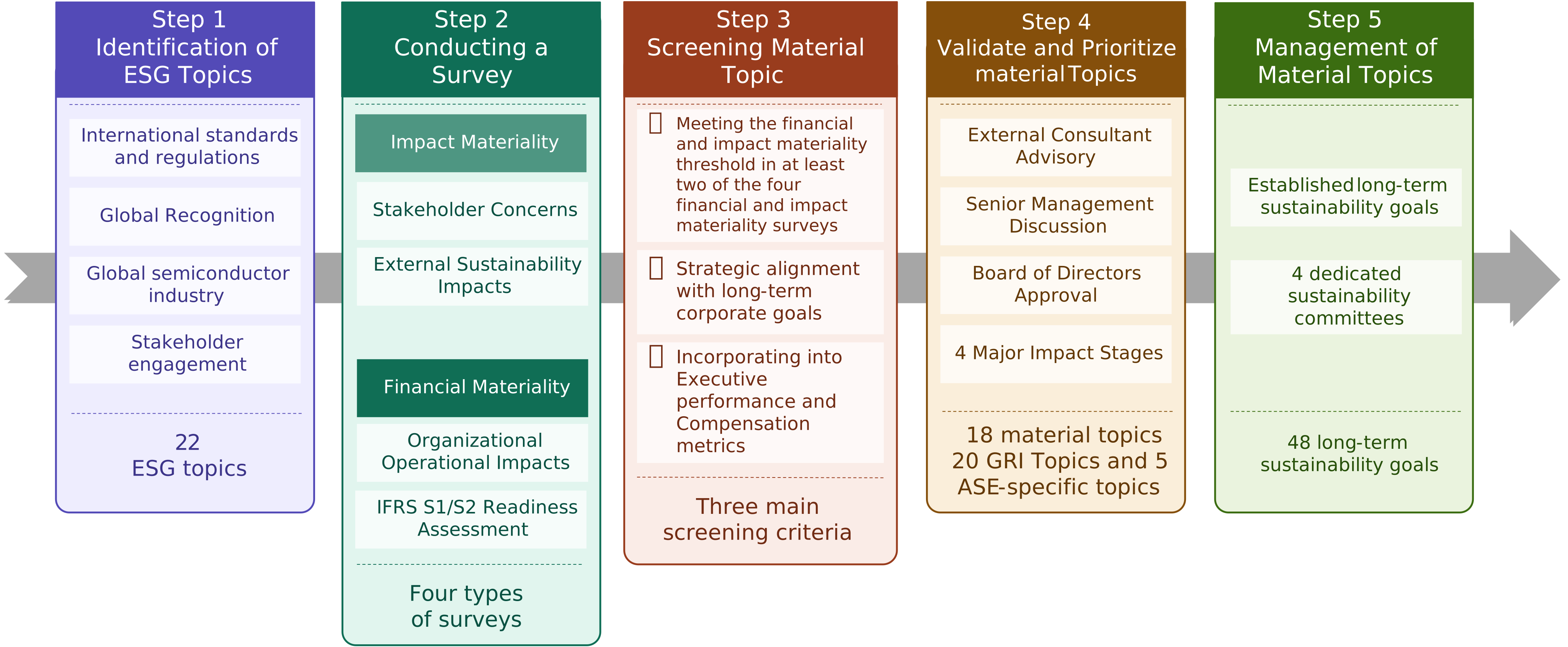

22 ESG topics
To help identify material topics of significance and relevance to the organization, we evaluated international standards and regulations, and sustainability investment ratings, benchmarked against semiconductor industry peers, and integrated insights from stakeholder engagement. 22 ESG material topics were identified - including the addition of the “Smart and Sustainable High-Tech Facility” to the list this year.
10 Economic topics, 6 Environmental topics, 6 Social topics
International standards and regulations: GRI Standards, Sustainability Accounting Standards Board (SASB), SDGs, RBA, Task Force on Climate-related Financial Disclosures (TCFD), and Task Force on Nature-related Financial Disclosures (TNFD)
Global Recognition: Dow Jones Best-in-Class index (DJBIC Index)/ formerly Dow Jones Sustainability Indices (DJSI), Climate Disclosure Project (CDP), MSCI ESG Index, and FTSE4Good Emerging Index
Global semiconductor industry: Benchmarking sustainability policies and practices from semiconductor companies listed on the DJSI
Stakeholder engagement: Analyses of online media reports and regular/occasional stakeholder communication to evaluate stakeholders’ perceptions of sustainability issues

Four types of surveys were distributed
The company aligns with leading international sustainability disclosure standards, incorporates diverse stakeholder expectations, and applies the double materiality principle to identify and prioritize material sustainability topics.
22 ESG topics were identified and evaluated across the two core dimensions of impact materiality and financial materiality. Feedback and comments from stakeholders were collected through four online surveys. Concurrently, managers at all levels proceeded to assess the levels of impact, while department heads worked together with the sustainability team on sustainability impact identification. For the assessment on financial materiality, all business units proactively identified relevant risks and opportunities. The company’s CFO and CAO will then review and validate these risks and opportunities to determine the financial materiality of each topic.
Impact Materiality
We have designed two questionnaires - “Stakeholder Concern Regarding Sustainability Topics” and “External Sustainability Impacts,” to evaluate impact materiality.
3,407 stakeholders participated in the Stakeholder Concern Survey
Stakeholder Concerns: Stakeholder input plays a key role in ASEH’s material topic identification process, serving as a vital communication channel between the company and our external partners. In 2025, in accordance with the AA1000 Stakeholder Engagement Standard (AA1000 SES), we have systematically evaluated the significance and priority of stakeholder groups across five key criteria: Dependency, Responsibility, Tension (Concern), Influence, and Diverse Perspectives. A total of 21 managers and employees participated in this assessment process. Ten stakeholder groups were identified as the primary focus for subsequent communication and engagement efforts. This year, “academic institutions” was included as a new stakeholder category.
A total of 3,407 responses was collected from the survey. The respondents comprised: employees (2,049), suppliers and contractors (783), community representatives (186), academic institutions (115), customers (90), NGOs (40), industry unions and associations (33), shareholders (30), media representatives (29), and government agencies (52). The survey sampling methodology was structured to ensure diversity and comprehensive representation, and to adequately reflect stakeholder perspectives across different sectors. The ESG topics of concern ranked in the top 33% were: Business Ethics, Regulatory Compliance, Risk and Crisis Management, Data Privacy, Occupational Health and Safety, Human Rights Management, Energy Management, Waste and Circular Reuse, and Information Security Management. These material topics reflect external expectations of ASEH’s corporate responsibilities, and serve as important references for the company in formulating its sustainability development strategies and targets.
10 Major Sustainability Impacts
Sustainability Impact: Methodologies developed by key organizations such as the Value Balancing Alliance (VBA), Harvard Business School’s Impact-Weighted Accounts Initiative (IWAI), and the London Benchmarking Group (LBG) were used to help identify a total of 22 external sustainability impact indicators relevant to our operations, including 5 economic impacts, 6 environmental impacts, and 11 social impacts. During the impact identification phase, 46 department heads and core sustainability team members participated in identifying significant external impacts relevant to ASEH’s operations: positive vs. negative impacts, actual vs. potential impacts, severity (scale), scope, irremediability, likelihood of occurrence, and regulatory compliance. 10 external impacts significantly relevant to the company were identified. Participants also leveraged their own experience to assess the relevance of each ESG topic to the identified external impacts. The results indicated that Sustainable Supply Chain, Sustainable Manufacturing, and Waste and Circular Reuse were the major ESG topics contributing to the identified external impacts.
Financial Materiality
The “Organizational and Operational Impacts” and the “IFRS S1/S2 Readiness Assessment” surveys were used as the basis for assessing impact materiality.
183 executives and members of the Corporate Sustainability Committee participated in the Organizational Operational Impact Survey
Organizational and Operational Impacts: A total of 183 executives and members of the Corporate Sustainability Committee participated in the assessment of the impact of each ESG topic across four key operational factors: Revenue Generation, Risk Exposure, Customer Satisfaction, and Employee Engagement. The results indicated that the ESG topics with the most significant operational impact were Regulatory Compliance, Customer Relationship Management, Risk and Crisis Management, and Data Privacy. The systematic identification of the impact of each ESG issue on core business operations allow us to enhance resource allocation, develop more targeted ESG strategies, and further strengthen the integration of sustainability into company operations.
5 Major Risks and Opportunities
IFRS S1/S2 Readiness Assessment: After defining materiality thresholds, five major sustainability-related risks and opportunities with significant financial impacts on the company were identified: Supplier Management, Human Capital, Climate Transition, Physical Climate-Related Risks, and Water Transition. These findings were subsequently submitted to senior management for validation. The corresponding ESG topics carrying the highest financial impacts include: Climate Strategy, Energy Management, Sustainable Supply Chain, Talent Attraction and Retention, and Talent Development.

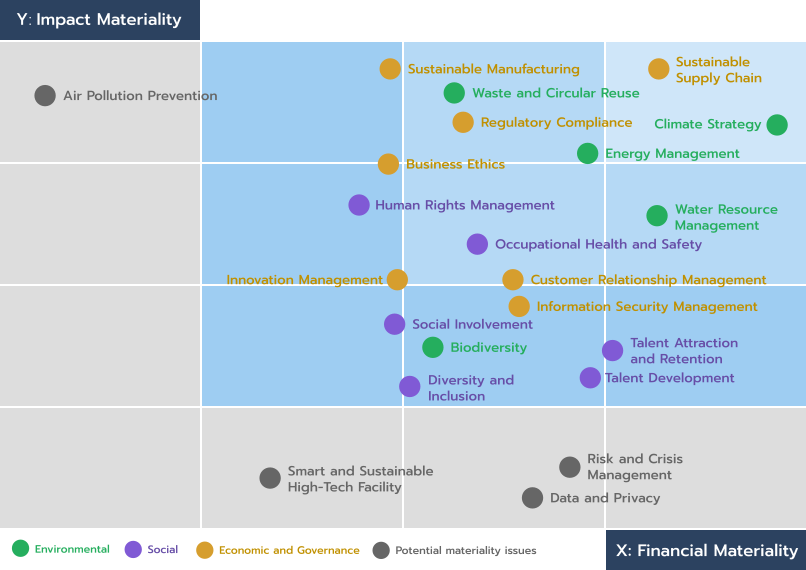
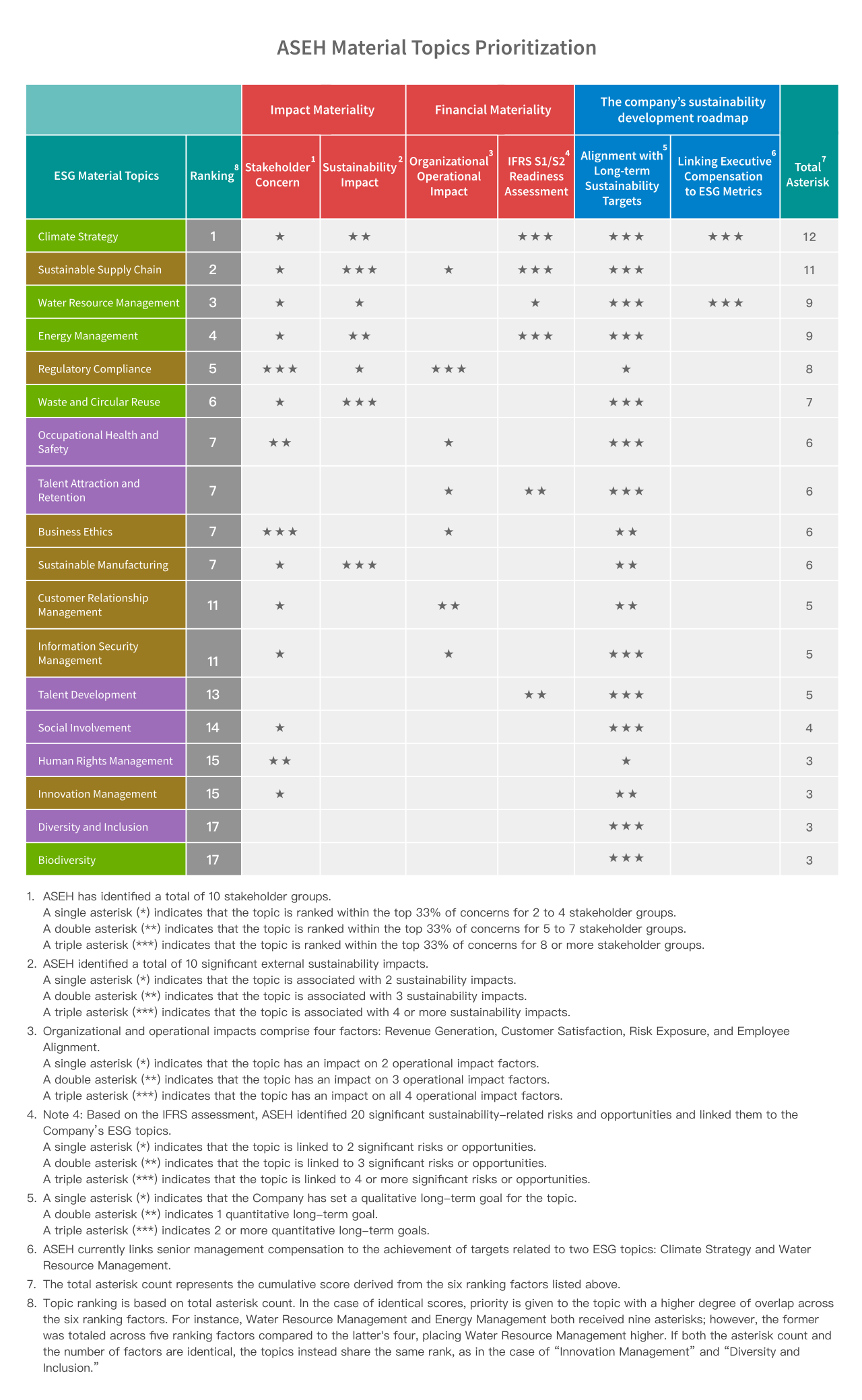
ASEH has established a multi-layered evaluation framework to ensure the objectivity of its materiality assessment results. The methodology incorporates the results of both financial materiality and impact materiality assessments, closely aligning sustainability issues with our long-term development strategy. Financial materiality is assessed based on operational impact evaluations and IFRS S1/S2 assessments, while impact materiality is evaluated through stakeholder surveys and sustainable development impact assessments. In addition to the survey results, other considerations including the company’s sustainability development roadmap, long-term sustainability targets, and the linking of executive compensation to ESG metrics, were also incorporated into the assessment process. Material topics are selected based on the following criteria:
Three main screening criteria
Criteria 1: Meeting the financial and impact materiality threshold in at least two of the four materiality surveys
Criteria 2: Alignment with the company’s long-term sustainability targets
Criteria 3: Linking executive compensation to ESG metrics
Topics satisfying at least two of these criteria were prioritized as material. To finalize the material topics for the 2025 Sustainability Report, we convened a sustainability review meeting, and conducted indepth discussions with consultants and senior management. This process ensured that the report aligns with ASEH’s overall sustainability strategy while proactively addressing stakeholder concerns.

18 Material topics
Following a structured evaluation process and defined selection criteria, the company identified and prioritized 18 material sustainability topics in the following sequence:
- Climate Strategy
- Sustainable Supply Chain
- Water Resource Management
- Energy Management
- Regulatory Compliance
- Waste and Circular Reuse
- Occupational Health and Safety
- Talent Attraction and Retention
- Business Ethics
- Sustainable Manufacturing
- Customer Relationship Management
- Information Security Management
- Talent Development
- Social Engagement
- Human Rights Management
- Innovation Management
- Biodiversity
- Diversity and Inclusion
4 Major Impact Stages, Corresponding to 25 Topics Topics
These issues were formally presented to the Board of Directors and validated based on their relevance and impact across four key stages of the ESG value chain: upstream procurement, manufacturing facilities, downstream impact, and external value chain stages.
Each issue was subsequently mapped across 20 GRI Topics and 5 ASE-specific topics, with disclosures adhering to the principles of double materiality. The report outlines the impact scope, management approach, and associated risks for each material issue. Non-material issues were also disclosed in the sustainability report to ensure transparency in stakeholder communication.

The ASE Holdings Corporate Sustainability and Information Security Committee (CSISC) conducts annual reviews to track milestones and oversee each business units’ progress. In addition, the internal sustainability committees within each of our three major subsidiaries regularly convene to closely monitor the progress of these goals and track emerging sustainability trends.
48 Long-term Goals
To enhance the company’s sustainability impact, we have established clear commitments for each material issue and set 48 long-term sustainability goals for 2035. These goals are being progressively implemented through various projects and initiatives across our global sites.
4 Dedicated sustainability committees
ASE Holdings Corporate Sustainability and Information Security Committee (CSISC)
ASE Corporate Sustainability Committee
SPIL Sustainability Committee
USI Sustainability Committee
Double Materiality Matrix
Other topics
Other topics
